

How Many Beehives Do You Need for a Texas Ag Exemption? (All 43 Counties, Verified 2026)

Updated: Aug 13
Here's the short answer: most Texas counties require 6 hives on your first 5 acres, plus 1 more hive for every additional 2.5 acres — which works out to about 12 hives on a 20-acre tract. But that's only the most common standard, not a statewide rule. Of the 43 counties we service, 17 use a different formula, and the differences are big enough to change your costs: Tarrant, Dallas, Wood, and Ellis Counties require just 6 hives at any qualifying acreage, while Hays and Hill Counties step to 16 at a full 20 acres.
New to the topic? Start with our complete Texas ag exemption guide — the statewide rules, savings, and application process in one place.

There is no state-mandated hive count. Texas Property Tax Code §23.51 makes beekeeping a qualifying agricultural use, but it leaves the "degree of intensity" — how many hives your land needs — to each county appraisal district. That's why the only reliable answer is county-by-county, and why we verify each county's standard directly with the appraisal district. Every number in the list below was confirmed with the county CAD as of August 4, 2026, not pulled from the recycled third-party lists most websites use.
Own 5–20 acres in Texas? We place and manage the hives; you keep the valuation. Free eligibility check — call 469-573-4232 or get a quote.
Hive requirements by county (verified August 4, 2026)
Counts shown for common tract sizes. All counties require between 5 and 20 acres of qualifying open land.
The standard progression — 6 · 8 · 10 · 12 hives at 5 · 10 · 15 · 20 acres — applies in these 26 counties: Anderson, Collin, Comanche, Cooke, Delta, Denton, Fannin, Gillespie, Grayson, Gregg, Harrison, Henderson, Hood, Hopkins, Kaufman, Lamar, Liberty, Montague, Montgomery, Navarro, Palo Pinto, Parker, San Jacinto, Smith, Van Zandt, and Wise.
How to read the lines below: each county shows the hives required at 5 · 10 · 15 · 20 acres.
The 17 counties with their own standards:
Blanco: 6 · 6 · 8 · 8 — 6 hives through 12.99 acres, 8 from 13 up.
Bosque: 3 · 4 · 5 · 6 — the lightest table we service.
Burnet: 6 · 6 · 8–12 · 8–12 — 6 hives through 10 acres, then banded 8–12.
Dallas: 6 · 6 · 6 · 6 — flat 6 hives at any acreage.
Ellis: 6 · 6 · 6 · 6 — flat minimum 6 hives at any qualifying acreage, plus Texas Apiary Inspection Service registration.
Erath: 4 · 7 · 10 · 12.
Hays: 6 · 10 · 13 · 16 — a hive per 1.5 acres, on the property year-round.
Hill: 6 · 10 · 13 · 16 — a hive per 1.5 acres, on site year-round.
Hunt: 6 · 6 · 8 · 10 — half a hive per acre past 12.
Johnson: 5 · 5 · 7 · 8 — flat tiers.
Rains: 8 mainframe hives at 20 acres — written CAD guidelines, July 2026; smaller tracts confirmed case-by-case.
Somervell: 4 · 7 · 9 · 12 — about a hive per 2 acres.
Tarrant: 6 · 6 · 6 · 6 — flat 6 hives at any acreage, water within a quarter mile.
Travis: 6 · 8 · 11 · 13 — a hive per 2 acres; annual beekeeping survey due February 1.
Waller: 5 · 5 · 7 · 8 — flat tiers.
Williamson: 6 · 8 · 11 · 13 — a hive per 2 acres.
Wood: 6 · 6 · 6 · 6 — a flat 6 active colonies at any qualifying acreage, per the county’s current published qualifications.
Watch the annual paperwork too: Travis County requires a Beekeeping Annual Survey by February 1 each year, and Collin, Montague, and Wise require annual beekeeping reports by April 30 to keep the valuation. Wise also sets a minimum 185 days on the property, and Comanche requires one permanent hive year-round plus USDA FSA certification.
Travis is the one to watch: TCAD requires that survey to be filed with supporting documentation — hive location maps with photos, routine inspection logs, and lease agreements where applicable. A survey submitted without it is treated as incomplete and may result in removal of the agricultural valuation. Full detail on the Travis County requirements page.
How Many Bee Hives Per Acre for an Ag Exemption?
Most Texas counties require 6 hives on your first 5 acres, plus one more hive for every additional 2.5 acres — about 12 hives on 20 acres. A handful of counties run steeper or flatter schedules, so use the verified table below for the exact hive counts and scaling formula in all 43 counties we service.
County | 5 acres | 10 acres | 15 acres | 20 acres | How it scales |
6 | 8 | 10 | 12 | 6 for first 5 ac, +1 per 2.5 ac | |
6 | 6 | 8 | 8 | Tiered: 6 (5–12.99 ac) · 8 (13–20 ac) | |
3 | 4 | 5 | 6 | Fixed CAD tiers (2023 guidelines) | |
6 | 6 | 8–12 | 8–12 | Banded: 6 (5–10 ac) · 8–12 (11–20 ac) | |
6 | 8 | 10 | 12 | 6 for first 5 ac, +1 per 2.5 ac | |
6 | 8 | 10 | 12 | 6 for first 5 ac, +1 per 2.5 ac | |
6 | 8 | 10 | 12 | 6 for first 5 ac, +1 per 2.5 ac | |
6 | 6 | 6 | 6 | Flat minimum 6 (published Ag Guidelines ver. 11/21) | |
6 | 8 | 10 | 12 | 6 for first 5 ac, +1 per 2.5 ac | |
6 | 8 | 10 | 12 | 6 for first 5 ac, +1 per 2.5 ac | |
6 | 6 | 6 | 6 | Flat minimum 6 hives (published CAD intensity table) | |
4 | 7 | 10 | 12 | Fixed CAD tiers at 5/10/15/20 ac | |
6 | 8 | 10 | 12 | 6 for first 5 ac, +1 per 2.5 ac | |
6 | 8 | 10 | 12 | 6 for first 5 ac, +1 per 2.5 ac | |
6 | 8 | 10 | 12 | 6 for first 5 ac, +1 per 2.5 ac | |
6 | 8 | 10 | 12 | 6 for first 5 ac, +1 per 2.5 ac | |
6 | 8 | 10 | 12 | 6 for first 5 ac, +1 per 2.5 ac | |
6 | 10 | 13 | 16 | 6 for first 5 ac, +1 per 1.5 ac | |
6 | 8 | 10 | 12 | 6 for first 5 ac, +1 per 2.5 ac | |
6 | 10 | 13 | 16 | 6 for first 5 ac, +1 per 1.5 ac | |
6 | 8 | 10 | 12 | 6 for first 5 ac, +1 per 2.5 ac | |
6 | 8 | 10 | 12 | 6 for first 5 ac, +1 per 2.5 ac | |
6 | 6 | 8 | 10 | 6 for 5–12 ac, then ½ hive per acre (13–20 ac) | |
5 | 5 | 7 | 8 | Tiered: 5 (5–10 ac) · 7 (10–15) · 8 (15–20) | |
6 | 8 | 10 | 12 | 6 for first 5 ac, +1 per 2.5 ac | |
6 | 8 | 10 | 12 | 6 for first 5 ac, +1 per 2.5 ac | |
6 | 8 | 10 | 12 | 6 for first 5 ac, +1 per 2.5 ac | |
6 | 8 | 10 | 12 | 6 for first 5 ac, +1 per 2.5 ac | |
6 | 8 | 10 | 12 | 6 for first 5 ac, +1 per 2.5 ac | |
6 | 8 | 10 | 12 | 6 for first 5 ac, +1 per 2.5 ac | |
6 | 8 | 10 | 12 | 6 for first 5 ac, +1 per 2.5 ac | |
6 | 8 | 10 | 12 | 6 for first 5 ac, +1 per 2.5 ac | |
Set w/ CAD | Set w/ CAD | Set w/ CAD | 8 | Written guidelines: 8 hives at 20 ac; smaller tracts set case-by-case | |
6 | 8 | 10 | 12 | 6 for first 5 ac, +1 per 2.5 ac | |
6 | 8 | 10 | 12 | 6 for first 5 ac, +1 per 2.5 ac | |
4 | 7 | 9 | 12 | 4 for first 5 ac, ~+1 per 2 ac | |
6 | 6 | 6 | 6 | Flat 6 at any qualifying acreage | |
6 | 8 | 11 | 13 | 6 for first 5 ac, +1 per 2 ac | |
6 | 8 | 10 | 12 | 6 for first 5 ac, +1 per 2.5 ac | |
5 | 5 | 7 | 8 | Tiered: 5 (5–10) · 7 (10–15) · 8 (15–20); native bees OK | |
6 | 8 | 11 | 13 | 6 for first 5 ac, +1 per 2 ac | |
6 | 8 | 10 | 12 | 6 for first 5 ac, +1 per 2.5 ac | |
6 | 6 | 6 | 6 | Flat 6 active colonies at any qualifying acreage — no per-acre scale |
*Dallas note: DCAD's published Ag Guidelines (ver. 11/21) set a flat minimum of 6 hives for any qualifying 5–20 acre tract, with current Texas Apiary Inspection Service registration required.
Want the exact count for your acreage instead of the common sizes? Every one of our county pages has a calculator that runs your county's precise formula — find yours from our Ag Exemption page.
The counties that break the pattern
The lightest standards. Dallas, Tarrant, Wood, and Ellis all require just 6 hives at any qualifying acreage — the same count on 5 acres or 20 (Tarrant adds a water source within a quarter mile). Bosque runs the lightest table we service, topping out at 6 hives on 20 acres. Rains issued written guidelines in our July 30, 2026 verification pass setting 8 mainframe hives at 20 acres, with smaller tracts confirmed case-by-case with the district.
The heaviest. Hays and Hill both step a hive per 1.5 acres to 16 at 20 acres, and both require hives on the property the full calendar year — Hill additionally registers apiaries and runs 1–2 compliance inspections annually, while Hays requires a bee-forage landscape plan with the application. On these tracts, hive count and compliance load are real planning variables, which is exactly why we design the hive plan before quoting.
The tiered counties. Blanco, Bosque, Johnson, and Waller skip the per-acre math and use brackets — Blanco wants 6 hives up to 12.99 acres and 8 from 13 to 20, Bosque runs the lightest schedule we service (3 active hives at 5 acres rising to 6 at 20, per its 2023 guidelines), and Johnson County wants 5 hives anywhere from 5 to 10 acres, 7 from 10 to 15, and 8 from 15 to 20. If you're near a bracket line, one acre can change your requirement.
The odd ones out. Hunt County holds at 6 hives all the way to 12 acres, then adds half a hive per acre — about 10 at 20 acres, one of the friendlier standards in the Dallas region for mid-sized tracts. Burnet moved to a banded standard for 2026 — 6 active hives for 5–10 acres and 8–12 for 11–20, refreshed each October. Somervell publishes its own step table, landing at 12 hives on 20 acres.
What actually counts as a hive
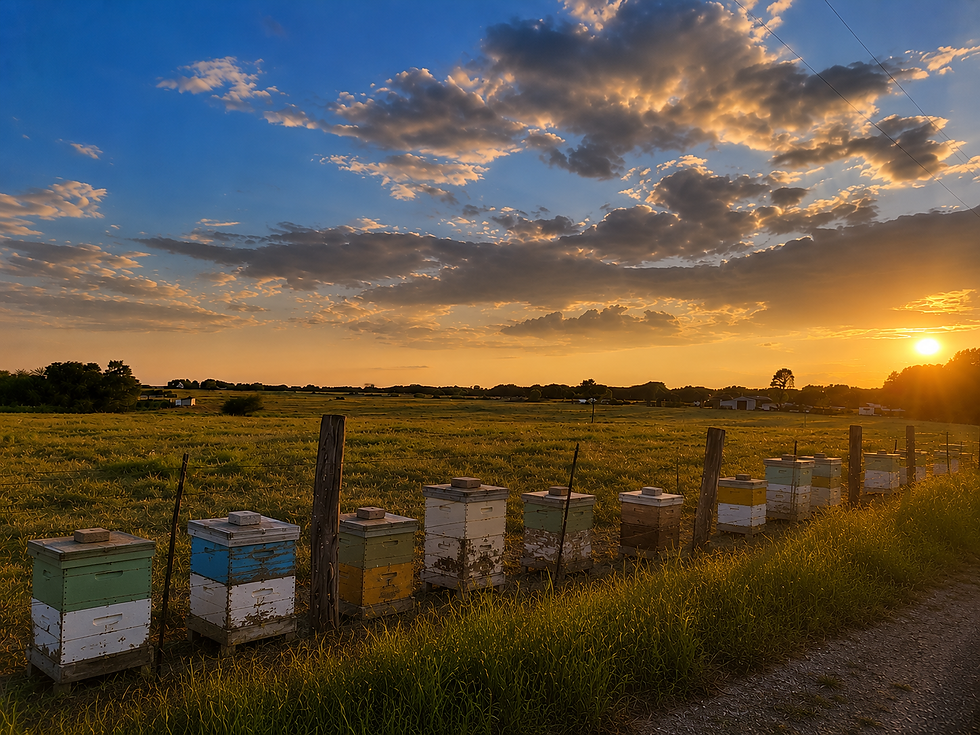
Appraisal districts count active, managed colonies — live bees, maintained through the season — not stacks of empty equipment. Where a county sets a time-on-property figure it is most often around 7 months, and a few require the colonies there the full calendar year, so migratory drop-in arrangements that park bees for a few weeks generally don't qualify. Dead colonies that aren't replaced can put your count below standard at exactly the wrong moment: when the district checks. That's why our management contracts include dead-out replacement at no extra cost — the count the county sees is always the count the county requires.
Standards change. Verify before you build a plan.
CADs revise intensity standards, sometimes without much announcement. A hive plan built on a two-year-old forum post can leave you short. We re-confirm every county's standard directly with the appraisal district each season, and we build every hive plan to the current number — if you'd rather check yourself, call your CAD and ask for their beekeeping degree-of-intensity guidelines before you commit to anything.
Three Things That Change Your Number
Your homestead doesn't count. Most counties carve roughly an acre out for your house and improvements — so a 6-acre property with a home usually has 5 qualifying acres, right at the minimum.
The cap is 20 acres. Beekeeping can qualify at most 20 acres per property. Larger tracts can qualify the first 20 with bees and cover the remainder with another agricultural use.
Being under-hived is how valuations get lost. If a colony dies and your count drops below the standard, your qualifying use can be treated as interrupted — which is why our service includes colony replacement and dated documentation, so a bad mite year doesn't cost you the valuation.
Hive Count FAQs
How many hives do I need for 10 acres in Texas?
In most counties, 8 hives — 6 for the first 5 acres plus 2 more for the additional 5 acres at one per 2.5. In lighter counties it can be fewer; in the steepest counties like Hays it can be 10. Check your county's page for the exact verified standard.
Do all the hives have to be alive and active?
Yes — the standard is for managed, active colonies, and appraisal districts can ask for proof. Dead-outs need to be replaced promptly, which is why replacement policy matters when you hire a service.
Can I start with fewer hives and build up?
If you're building a new 5-year history, some counties accept a ramp-up in the early years, but practices vary — and the safest reading is to meet the published standard every year you claim the use. Get your county's position in writing.
What if my county isn't listed here?
We keep verified standards for all 43 counties we serve here, each with the county appraisal district's contact information. If yours isn't among them, call your CAD and ask for their beekeeping degree-of-intensity standard — or call us and we'll track it down.
What to read next
How Much Does Ag Exemption Beekeeping Cost in Texas? (2026 Pricing Guide)
Form 50-129, Start to Finish: How to Apply for a Texas Ag Valuation
Building Your 5-Year Ag History: The Year-by-Year Playbook
The Rollback Tax Trap: What Losing Your Ag Valuation Really Costs
Or skip the reading: tell us your county and acreage, and we'll design the exact hive plan and quote it — get your free ag quote.
Reviewed by Hayden, owner of Timber Creek Bees — a commercial beekeeping operation managing 2,000+ hives across 40+ Texas counties. County standards verified directly with each appraisal district — last verified August 4, 2026.
Not sure which bracket your acreage falls in?
Tell us your county and your acreage and we'll confirm the exact hive count your appraisal district requires — verified with the CAD, not estimated from a formula.
We verify every county's standard directly with its appraisal district


Comments